
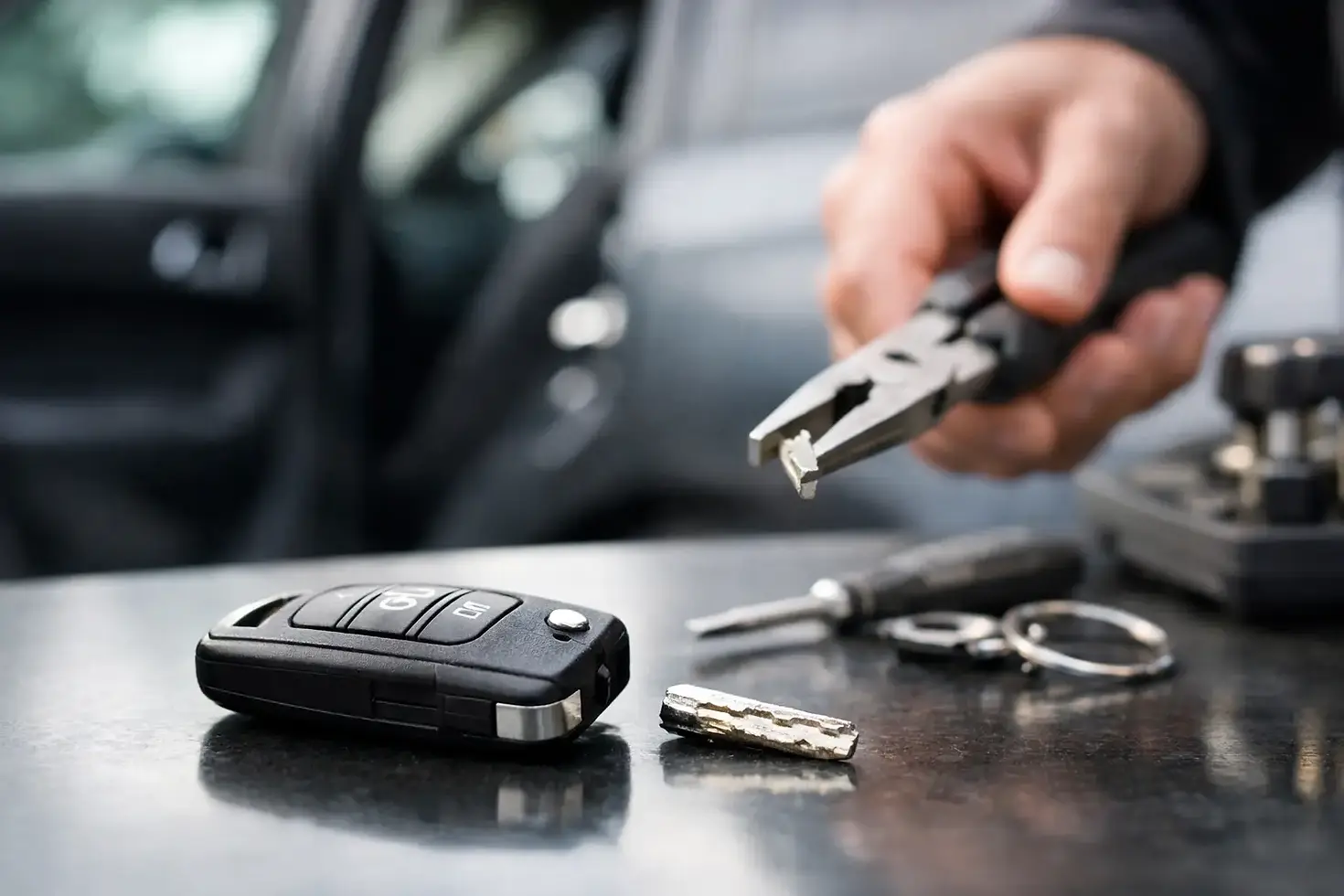
Snapped Key Rescue When Your Car Key Breaks

A key breaking off in your car door or ignition can stop your day immediately. Snapped key rescue is not a problem to force your way through. One wrong pull, tool, or turn can push the broken piece deeper, damage the ignition, and turn a simple extraction into a larger repair.
If you are stranded in Tehachapi or nearby, start by protecting the lock or ignition. Keep the remaining key piece, avoid improvised tools, and get help from a mobile automotive locksmith who can remove the fragment and make sure you have a working key before you are left stuck again.
What to Do the Moment a Key Snaps
First, stop turning the key. Whether it broke in the door lock, trunk lock, or ignition cylinder, pressure can drive the broken tip farther inside. If the key snapped while the ignition was turned, do not try to start the vehicle again or twist the exposed piece with pliers.
Take a close look without inserting anything into the keyway. If a large part of the key is sticking out and it slides freely, you may be tempted to pull it. That can work in limited cases, but it can also bend the fragment or catch it on the lock pins. If the piece does not come out with almost no resistance, leave it alone.
Keep both pieces of the key if you have them. The full key gives a locksmith useful information for cutting a replacement, identifying wear patterns, and checking whether the original key was already damaged before it broke.
Do Not Turn a Small Problem Into Lock Damage
Many vehicle keys break because they are already worn, bent, cracked, or loose at the plastic head. The metal blade may have weakened over time, especially if the key has been used to pry something open, carried under heavy items, or repeatedly forced in a stiff ignition.
The biggest mistake after a break is using household tools. Screwdrivers, bobby pins, wire, paper clips, and tweezers usually push the piece deeper or scrape the internal parts of the lock. Super glue is another bad option. Glue can spread into the ignition or door lock, bind the pins, and create a much more expensive repair.
A broken key extraction requires narrow tools designed to catch and remove the fragment without damaging the cylinder. The goal is not just to get the piece out. It is to leave the lock functioning correctly afterward.
Snapped Key Rescue in an Ignition Takes Extra Care
A key broken in a door lock is frustrating. A key broken in the ignition can keep the entire vehicle from moving, and it may point to another issue that needs attention.
Ignition cylinders wear out. If your key has been hard to turn, needs to be wiggled, or only works in one position, the ignition may be binding. Forcing a worn key through a failing cylinder is a common reason keys snap. Removing the broken piece without checking the ignition can leave you with a new key that still will not turn.
A professional can determine whether the issue is the key blade, the ignition cylinder, or both. Depending on the vehicle, the right repair may be extraction and a replacement key, ignition repair, or ignition replacement. It depends on the condition of the cylinder and how much internal damage has occurred.
Modern vehicles add another layer. A metal key may contain a transponder chip, while a smart key or fob may need programming before the engine will start. Cutting a new blade alone may not solve the problem if the vehicle requires electronic authorization.
When to Call a Mobile Locksmith Right Away
Call for professional help if the broken piece is fully inside the lock or ignition, the key will not turn, or you are locked out of the vehicle. You should also call if the key broke in a commercial truck, work van, heavy truck, or vehicle with a transponder key, push-button start system, or remote fob.
A mobile locksmith can come to the vehicle with extraction tools, key-cutting equipment, and programming capability for many makes and models. That matters when the car cannot be driven to a shop or when you need a replacement key on-site.
Locked Out Assistance handles emergency automotive locksmith calls throughout the Tehachapi area, including broken key extraction, ignition service, replacement keys, transponder programming, and smart key or fob replacement. Before service begins, be prepared to show identification and proof that you own or are authorized to access the vehicle. That verification protects vehicle owners and helps prevent unauthorized key work.
What Information Helps Get the Right Help Faster
When you call, give the dispatcher clear details about the vehicle and the break. A few accurate details can help the locksmith arrive prepared with the correct equipment and likely replacement options.
Have the vehicle's year, make, model, and location ready. Explain whether the key broke in the ignition, door, trunk, or another lock. Let them know whether the key is a standard metal key, a chip key, a remote-head key, or part of a smart fob. If you have a spare, say so. A spare may help confirm the key type and reveal whether the ignition was already failing.
Also describe your immediate situation. Are you safely parked at home, stuck at work, on the roadside, or blocking a driveway? A clear location and vehicle description are especially helpful after dark or during poor weather.
Can You Drive With a Broken Key Problem?
Sometimes the engine is already running when the key breaks. Do not assume that means you are in the clear. Many vehicles can continue running, but once you turn the engine off, you may not be able to restart it. In some cases, the broken key fragment remains in the ignition and prevents proper operation.
If the car is running and you are in a safe place, call for assistance before shutting it off. Do not drive a long distance if the ignition feels loose, binds, or will not return normally. A key or ignition failure while away from home can create a more difficult recovery situation.
For vehicles with push-button start, the issue may involve the emergency mechanical key stored inside the fob, the fob casing, or the electronic key itself. Avoid forcing the emergency key into a lock that is not turning smoothly. A locksmith can assess the mechanical and electronic sides of the problem.
How to Avoid Another Broken Key
A replacement key is a good time to address the reason the first one failed. If the ignition or door lock is stiff, ask for it to be checked. Repeated resistance is not normal, and waiting until the key snaps can leave you stranded at the worst possible time.
Use a lighter key ring. A heavy bundle of keys can place extra stress on the ignition over time, particularly on older vehicles. Replace keys that are visibly bent, deeply worn, cracked near the head, or difficult to insert. Keep a spare key somewhere safe, not inside the vehicle.
If you use a remote fob or smart key, protect it from impact and moisture. A damaged fob may still unlock the vehicle intermittently before it fails completely. Replacing it early is usually less stressful than handling a lost or broken key during an emergency.
Get the Vehicle Back to Working Order
A broken key is rarely just about the visible metal piece. The real job is restoring reliable access and starting function without causing damage to the lock, ignition, or vehicle electronics. That may mean extracting the fragment, cutting a new key, programming a chip, repairing the ignition, or handling more than one of those steps during the same visit.
If your key has snapped, resist the urge to force a quick fix. Put the pieces aside, keep the vehicle secure, and call for qualified on-site help. A careful response now can save you from a damaged ignition, an unnecessary tow, and another unexpected lockout later.



Comments