
Car Key Extraction Service When a Key Breaks
- Corey Chasten
- Aug 16
- 5 min read

A key that snaps in the door or ignition can turn a normal stop into a roadside problem fast. A professional car key extraction service removes the broken piece without causing more damage to the lock, ignition cylinder, or vehicle electronics. For drivers in Tehachapi, mobile help means you can get the problem handled where the vehicle is parked instead of arranging a tow for a broken key alone.
The right next step depends on where the key broke, how much of it is visible, and whether the ignition or lock was already sticking. Pulling at the fragment with household tools can make a repairable problem more expensive. If you are stranded, keep the vehicle secure, gather your ID and registration, and call for on-site locksmith assistance.
What a Car Key Extraction Service Handles
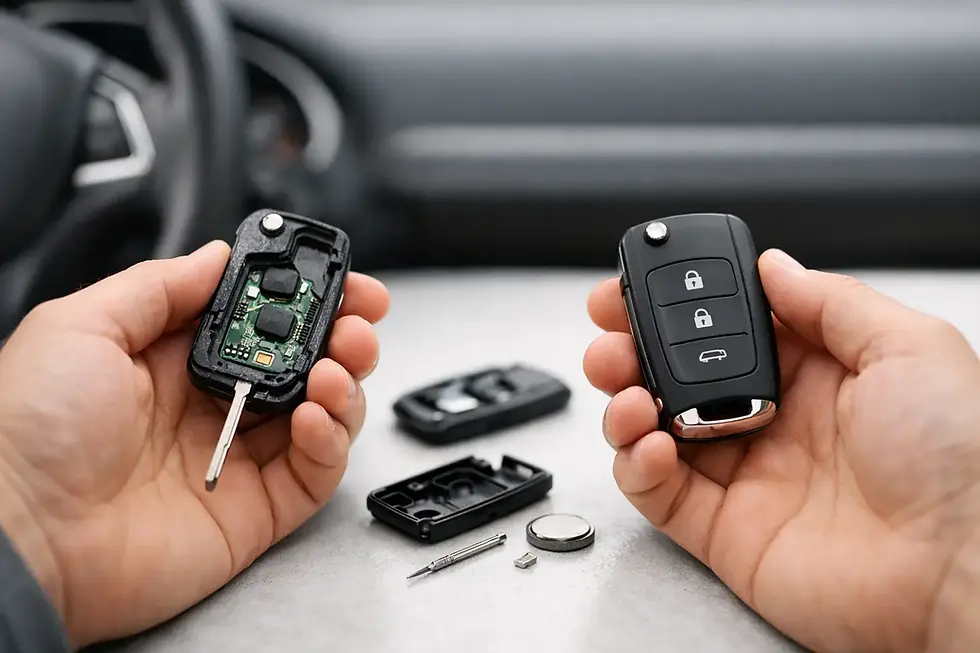
Broken vehicle keys do not all fail the same way. A metal key blade can break inside a door lock, trunk lock, ignition, or the keyway of a truck cap or work vehicle. Modern transponder keys and smart-key emergency blades add another concern: even after the broken piece is removed, the vehicle may still need a replacement key cut and programmed.
A mobile automotive locksmith begins by checking the location of the break and the condition of the lock or ignition. The goal is to remove the fragment cleanly while preserving the components that still work. If the key broke because an ignition cylinder is worn, simply removing the piece may get you unstuck for the moment, but it will not prevent the same problem from happening again.
For many vehicles, the job can include extraction, a new key, transponder programming, remote or fob replacement, and ignition repair if needed. That is usually more practical than making separate calls while your vehicle cannot be started.
Why Keys Break in Doors and Ignitions
Keys are small parts that take a lot of daily wear. Over time, the metal can weaken, especially around the shoulder where the blade meets the plastic head. A key may finally snap after years of turning in a stiff ignition, a worn door lock, or a lock exposed to dust, heat, and weather.
The key is not always the only issue. If you have to jiggle the key, push it in unusually hard, or force it to turn, the lock cylinder may be worn or damaged. Using a bent key can also put uneven pressure on the internal pins. A heavy key ring may contribute to ignition wear on some vehicles because of the repeated weight and movement while driving.
Cold mornings and debris in a lock can make a marginal key fail. So can a previous key that was copied from another worn copy rather than cut to the vehicle's correct specifications. If your spare key works more smoothly than your daily key, that is a warning worth acting on before the key breaks.
A broken key in the ignition needs extra care
An ignition is more sensitive than an exterior lock. It contains parts that must align correctly for the vehicle to recognize the key position and start. Pushing a broken key deeper, turning it with pliers, or spraying the wrong lubricant into the cylinder can damage internal components.
On vehicles with chip keys, forcing the remaining head of the key can also leave you with an extraction problem and a starting problem. A locksmith can assess whether the ignition cylinder still turns properly after the fragment is removed and whether the replacement key needs programming.
What to Do Before Help Arrives
First, stop trying to turn or remove the key if it feels stuck. Repeated force often drives the broken portion farther into the keyway. Do not insert screwdrivers, knives, paper clips, glue, magnets, or improvised hooks. Glue is particularly risky because it can bond the fragment to the lock components instead of the tool.
If part of the key is sticking out, leave it alone unless it can slide out with no resistance using your fingers. Do not twist it. Keep any piece that came out, including the key head, because it can help identify the correct key type and support replacement work.
When calling for service, be ready to provide the vehicle year, make, model, location, and whether the key broke in the ignition, door, trunk, or another lock. Tell the locksmith if the vehicle uses a transponder key, remote head key, push-button start fob, or standard metal key. Having your driver's license and vehicle registration available can prevent delays, since proof of ownership is required before vehicle key work can begin.
Extraction Is Only One Part of the Repair
Getting the broken piece out is urgent, but a reliable repair looks at what caused the break. If the lock works smoothly and the old key was simply worn, cutting a new key may be enough. If the ignition binds, the vehicle may need ignition repair or replacement to avoid another breakdown.
There are trade-offs. Repairing an ignition can be the sensible choice when the vehicle's original lock system can still be restored. Replacing it may be necessary when the cylinder is badly worn, internally damaged, or no longer reliable. The best option depends on the vehicle, the condition of the existing part, and whether the replacement needs to be matched to the door locks or programmed to the vehicle.
For newer cars, trucks, vans, and SUVs, the replacement process often includes programming. The metal blade may turn the ignition, but the engine will not start unless the chip or smart key is correctly recognized. Mobile programming equipment allows the replacement to be completed on-site for many major vehicle brands.
When You Need Emergency Mobile Service
A broken key deserves immediate attention when it leaves you unable to start the vehicle, unable to lock it, stuck away from home, or stranded at a job site. Commercial drivers and heavy-truck operators can lose valuable work time when a key or ignition problem takes a vehicle out of service. Families may face the same urgency when a child, pet, medication, or unsafe weather is involved.
Locked Out Assistance provides 24/7 mobile automotive locksmith help in Tehachapi and surrounding areas. The service vehicle comes to your location with tools for broken key extraction and, when appropriate, replacement key cutting, transponder programming, fob service, and ignition work. Availability of a specific key or fob can vary by vehicle, but providing accurate vehicle details upfront helps the technician prepare for the right job.
Transparent communication matters in an emergency. Ask what the service call covers, whether a new key is needed, and whether the lock or ignition shows signs of additional damage. A legitimate locksmith should explain the likely work before moving forward and verify that you are authorized to receive service for the vehicle.
How to Reduce the Chance of Another Broken Key
Once the immediate issue is fixed, use the new key as a chance to avoid repeating it. Keep a working spare in a safe place rather than waiting until the only key is lost, worn, or broken. If your ignition has been sticking, schedule repair instead of continuing to force it every day.
Avoid bending the key, using it as a pry tool, or carrying it on an overloaded ring. If the key starts catching in the door or ignition, address it early. A small amount of resistance is often the first sign that the key or cylinder needs attention.
A broken key does not have to mean towing, dealership delays, or damage from do-it-yourself extraction attempts. Keep the fragment, protect the vehicle, and get qualified mobile help. A careful extraction and the right replacement key can get you back on the road with a fix that lasts.



Comments