
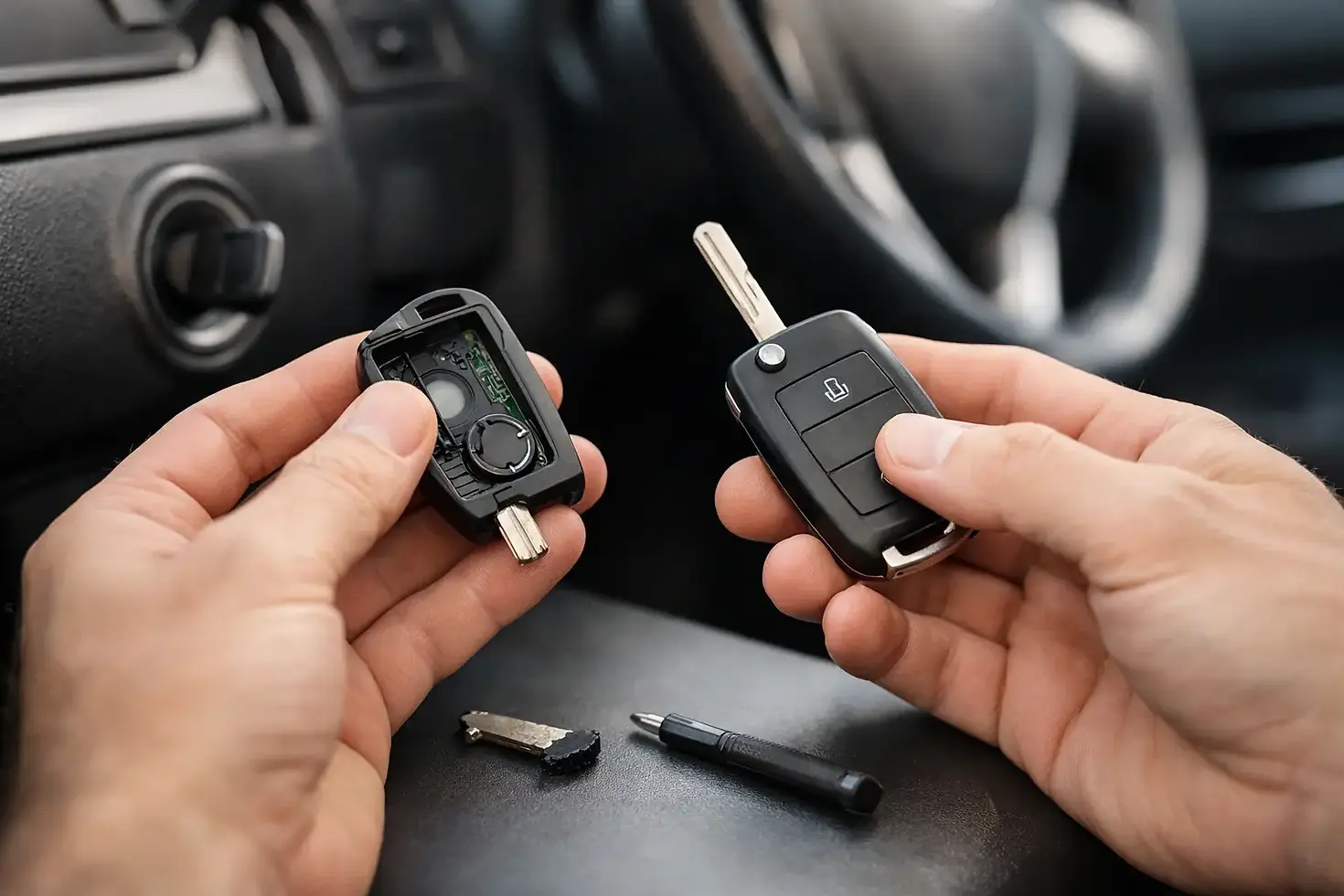
How to Replace a Broken Car Key Without Damage
- Corey Chasten
- 2 days ago
- 5 min read

A car key rarely breaks at a convenient time. It may snap in the ignition before work, crack at the door lock during a stop, or separate from the remote fob when you are already running late. Searching “how to replace broken car key” is a sensible first step, but the right fix depends on where the key broke and what type of key your vehicle uses.
The main goal is simple: avoid turning a broken key into a damaged lock, ignition, or expensive programming problem. A mobile automotive locksmith can usually assess the key, remove broken pieces safely, cut a replacement, and program it on-site when needed.
First, Stop Forcing the Key
If part of the key is stuck in the door lock or ignition, stop trying to turn it. Pushing, twisting, or jiggling the remaining piece can drive it farther inside or damage the lock wafers. Do not use pliers unless a large section is already fully outside the lock. Pulling at an angle can bend the broken piece and make extraction harder.
Avoid using glue, tape, magnets, or improvised hooks. Glue can seep into the lock cylinder and permanently bind internal parts. Most car keys are not magnetic, and household tools can scratch or distort the ignition. What looked like a key replacement can quickly become an ignition repair or replacement job.
If the key broke while the ignition was on, leave the vehicle in park, set the parking brake, and avoid moving the steering wheel aggressively. Some vehicles have steering-column locks that can add pressure to the key and complicate removal.
Identify What Actually Broke
A broken car key does not always mean the same thing. Older vehicles may use a basic metal key that only needs to be cut correctly. Many newer vehicles use a transponder key, remote-head key, smart key, push-button-start fob, or a fob with a hidden emergency blade. Each requires a different replacement process.
If the metal blade snapped but the remote still works, the remote may be reusable. A locksmith can often cut and install a new blade, depending on the fob design and condition. If the plastic head split and exposed the transponder chip, do not throw away any pieces. That small chip may be required to start the vehicle or may help create a replacement more efficiently.
A key that is badly worn can also feel “broken” even if it has not snapped. It may turn inconsistently, stick in the ignition, or work in the door but not start the car. In that situation, the problem could be a worn key, a failing ignition cylinder, or both. Repeatedly forcing a worn key is a common way to end up with a broken key inside the ignition.
How to Replace a Broken Car Key the Right Way
The replacement process starts with determining whether any portion of the original key is trapped in the vehicle. If it is, extraction should come before a new key is cut. A locksmith uses purpose-built extraction tools to remove the fragment while protecting the lock cylinder and ignition components.
Once the piece is removed, the replacement can be made from the remaining key, the vehicle’s key code, or the lock itself. The best method depends on the vehicle’s age, make, model, and the condition of the old key. If enough of the original blade remains, it may provide the information needed to make an accurate duplicate. If the key is too damaged or missing, the locksmith may originate a new key using the vehicle’s lock code or decode the lock.
For vehicles with a chip key or electronic fob, cutting the blade is only part of the job. The new key must also be programmed to communicate with the vehicle’s immobilizer system. Without correct programming, the key may turn in the ignition but the car will not start. Push-button-start vehicles typically require smart key programming rather than a traditional key-cutting process.
A professional should also test the replacement in the door, ignition, trunk, and remote functions when applicable. A key that starts the car but does not lock or unlock the doors is not a complete solution, especially when you are relying on it every day.
When the Ignition May Be the Real Problem
If your key broke in the ignition, do not assume the key was the only failure. An ignition cylinder that is worn, loose, or difficult to turn can put extra stress on the blade every time you start the vehicle. The same applies if the steering wheel locks frequently or you must wiggle the key to get power.
A replacement key may work temporarily, but it may break again if the ignition is failing. After extraction, the locksmith should check whether the new key turns smoothly. If it does not, ignition repair or replacement may be the safer next step. This costs more than a basic duplicate, but it can prevent another roadside breakdown and protect the vehicle from further damage.
What You Need Before a Locksmith Can Make a Key
Vehicle key replacement requires proof that you are authorized to have a key made. This protects vehicle owners and helps prevent theft. Have your photo identification, vehicle registration, title, or other ownership documentation available when possible. The name on your documentation should reasonably match the vehicle and your identification.
For many jobs, the vehicle identification number is also needed. You can often find the VIN on the dashboard near the windshield, on the driver’s door frame, on registration paperwork, or on insurance documents. If you are stranded away from home, photos of your documents on your phone may help, but requirements can vary based on the vehicle and situation.
Tell the locksmith the year, make, model, and whether the vehicle has a standard ignition key, remote fob, smart key, or push-button start. Accurate information helps the technician arrive prepared with the right key blank, fob, equipment, and programming capability.
What Affects the Cost and Time
The price to replace a broken car key depends on the key style and the work required. A basic metal key is generally faster and less involved than a transponder key, proximity fob, or keyless remote. Extraction, ignition repairs, key-code retrieval, after-hours service, and programming can also affect the total.
The fastest option is not always the cheapest option, and the cheapest replacement is not always the best value. An unprogrammed chip key or poorly cut duplicate can leave you with a key that does not start the vehicle or wears down the ignition. Ask what is included before work begins: extraction, key cutting, programming, remote testing, and any ignition inspection.
For drivers in Tehachapi and surrounding areas, Locked Out Assistance provides mobile automotive locksmith service for broken key extraction, replacement keys, transponder programming, smart keys, fobs, and ignition concerns. On-site service means you do not have to arrange a tow just to find out whether the key can be replaced where the vehicle sits.
Avoid Making the Next Key Problem Worse
Once you have a working replacement, keep it from becoming the only key you own. A spare key is especially useful for vehicles with expensive fobs or specialized transponder systems. Store it somewhere secure, not inside the vehicle and not hidden in an obvious exterior location.
Keep heavy keychains off the ignition key. Extra weight can contribute to ignition wear over time, particularly on older vehicles. If the key begins to stick, feels loose, or needs force to turn, have it checked before it snaps. A small problem is usually easier to handle than a broken key in a parking lot after dark.
When your key breaks, protect the lock first and get the right replacement for your vehicle. A careful extraction and properly programmed key can get you back on the road without adding unnecessary damage to the job.



Comments