

How Fast Can a Locksmith Arrive in Tehachapi?
- Corey Chasten
- Aug 2
- 5 min read

A locked vehicle at a gas station, your driveway, or the side of Highway 58 changes your plans fast. If you are asking how fast a locksmith can arrive, the honest answer depends on where you are, traffic, current call volume, and the type of problem. A local mobile locksmith can often reach Tehachapi-area customers quickly, but a responsible company will give you a realistic arrival window instead of making a promise it cannot keep.
For an emergency lockout, call as soon as you know you need help. The sooner a technician has your location and vehicle details, the sooner they can confirm availability, prepare the right equipment, and head your way.
How Fast Can a Locksmith Arrive for an Emergency?
Many emergency locksmith calls are handled within 20 to 45 minutes when the technician is already nearby and conditions are normal. That is a common target range, not a guarantee. A locksmith may arrive sooner when you are in central Tehachapi and the service vehicle is available. Travel can take longer if you are outside town, on a rural road, near a mountain pass, or calling during heavy traffic, bad weather, or a busy overnight period.
The type of service also affects the total time. Getting into a locked car may be relatively quick once the technician arrives. Replacing a lost key, programming a transponder key, repairing an ignition, or extracting a broken key can take longer because the work requires diagnosis, parts, cutting equipment, and programming tools.
A good dispatcher should separate travel time from job time. Ask two direct questions: how long until the locksmith arrives, and how long the expected repair or key service may take after arrival. That gives you a clearer picture of when you can get moving again.
What Affects Locksmith Response Time?
Location is usually the biggest factor. A mobile locksmith needs an exact address, cross streets, or a pin that places you accurately. Saying you are "near Tehachapi" is not enough when you are actually several miles out on a back road, parked at a trailhead, or stopped along a highway. If you are in an apartment complex, parking structure, or large shopping center, tell the dispatcher which entrance or building is closest.
Traffic and weather matter in this area as well. Wind, snow, fog, road closures, and highway congestion can slow travel and affect safe driving conditions. A technician should not rush through unsafe conditions just to give an unrealistic arrival time.
Current demand also matters. Lockouts tend to happen at inconvenient times: late at night, early in the morning, during school drop-off, or after events. A 24/7 locksmith can take emergency calls at any hour, but one technician may already be assisting another stranded driver. Clear communication about the queue and estimated arrival is far more useful than a vague "we'll be there soon."
Finally, the details of your vehicle can affect preparation. A locksmith may need to bring a specific remote, key blank, programmer, or ignition component for your make and model. Providing the year, make, model, and trim before dispatch can prevent wasted time and help the technician arrive ready to work.
Car Lockout Response Time Versus Key Replacement
A standard vehicle lockout is often the fastest call. The locksmith verifies you have the legal right to access the vehicle, uses professional entry methods designed to avoid damage, and gets you back inside. If the keys are visible on the seat or trunk, mention that when you call. It helps the technician understand the situation.
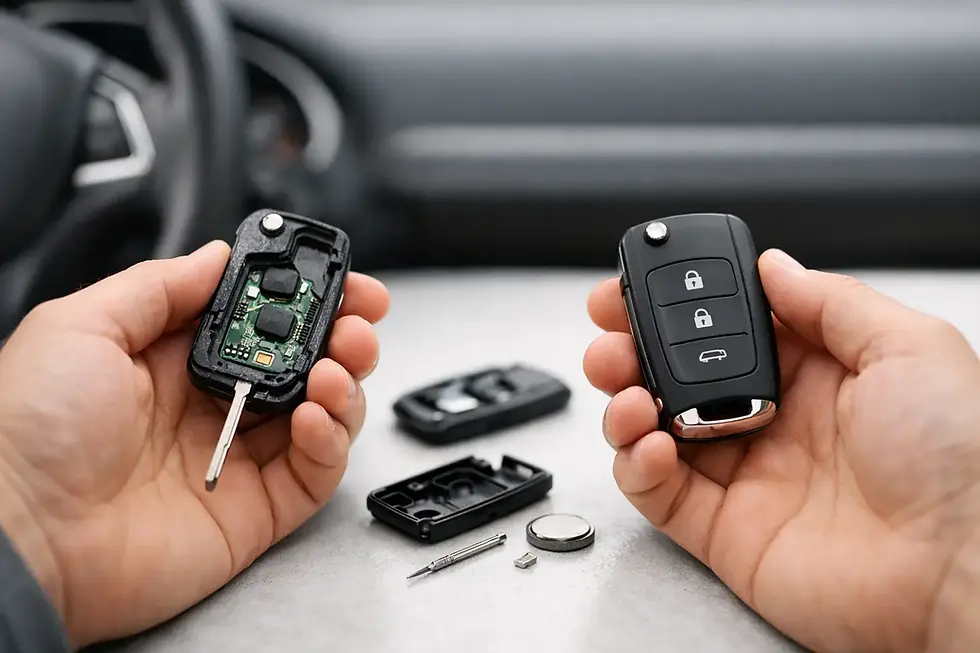
Lost or stolen car keys are more involved. Modern vehicles often use transponder chips, smart keys, remotes, push-button start fobs, or laser-cut keys. The replacement process may include cutting a key, programming it to the vehicle, testing the remote functions, and making sure the engine starts. Inventory on the service vehicle can make a major difference, especially for common makes and models, but certain specialty keys or parts may need to be ordered.
A broken key or damaged ignition also requires more than a quick arrival. The locksmith first needs to determine whether the key broke in the door, trunk, or ignition, and whether the lock cylinder or ignition has been damaged. Extraction, repair, and replacement are different jobs with different time requirements. Trying to force the key yourself can turn a manageable repair into a larger one.
Give the Dispatcher the Right Information
You can help shorten the process before the locksmith even leaves. Be ready to provide your exact location, a callback number, and the vehicle's year, make, model, and color. Explain whether this is a lockout, lost key, broken key, ignition issue, or remote problem. If the vehicle is in a difficult location, such as a gated community, roadside shoulder, work site, or parking garage, say so right away.
You should also be prepared to show identification and proof that you own or are authorized to access the vehicle. This may include a driver's license, registration, insurance card, rental agreement, or other documentation. Verification protects vehicle owners and helps legitimate locksmiths avoid opening or programming a vehicle for someone without authorization.
If you have the VIN available, it can be useful for some replacement-key situations. The VIN is commonly found on the driver's side dashboard near the windshield, on the driver's door jamb, and on registration or insurance documents. Do not worry if you cannot access it during a lockout. Tell the locksmith what you can see and what documents are available.
What to Do While You Wait for a Locksmith
Your first priority is safety. If you are parked in an unsafe location, move to a well-lit public area if you can do so safely. Stay away from traffic, especially if you are stranded on a highway shoulder. If a child, pet, elderly person, or anyone needing immediate medical attention is locked inside a vehicle, call 911 first. Emergency responders are the right first call when there is an immediate threat to life or health.
Do not use coat hangers, screwdrivers, wedges, or online tricks to force open a modern vehicle. Those attempts can scratch paint, bend a door frame, damage weather stripping, break an airbag component, or set off an alarm. The money saved by avoiding a service call can disappear quickly if the door, lock, or window needs repair afterward.
Keep your phone charged, watch for the technician's call, and stay where you said you would be. If your location changes, update the dispatcher immediately. For roadside calls after dark, turning on hazard lights can help the locksmith find you, provided it is safe to do so.
When a Fast Arrival Matters Most
Every lockout is frustrating, but certain situations deserve immediate attention: a driver stranded far from home, a commercial truck that cannot start, a family locked out in severe weather, or a key that broke while you are trying to get to work. In these moments, choosing a local mobile provider matters. Locked Out Assistance focuses on on-site automotive locksmith work in Tehachapi, including lockouts, key replacement, fob programming, broken key extraction, and ignition problems.
Before authorizing service, ask for the estimated arrival time and pricing information for your specific issue. Emergency service can involve travel, labor, programming, and replacement parts, so the lowest advertised price is not always the final price. Straight answers upfront help you make a better decision under pressure.
When you need help, give clear details, stay safe, and choose a locksmith that communicates honestly about the drive time and the work ahead. That is the fastest path from being stranded to being back on the road.



Comments