
Why Does Key Fob Stop Working?

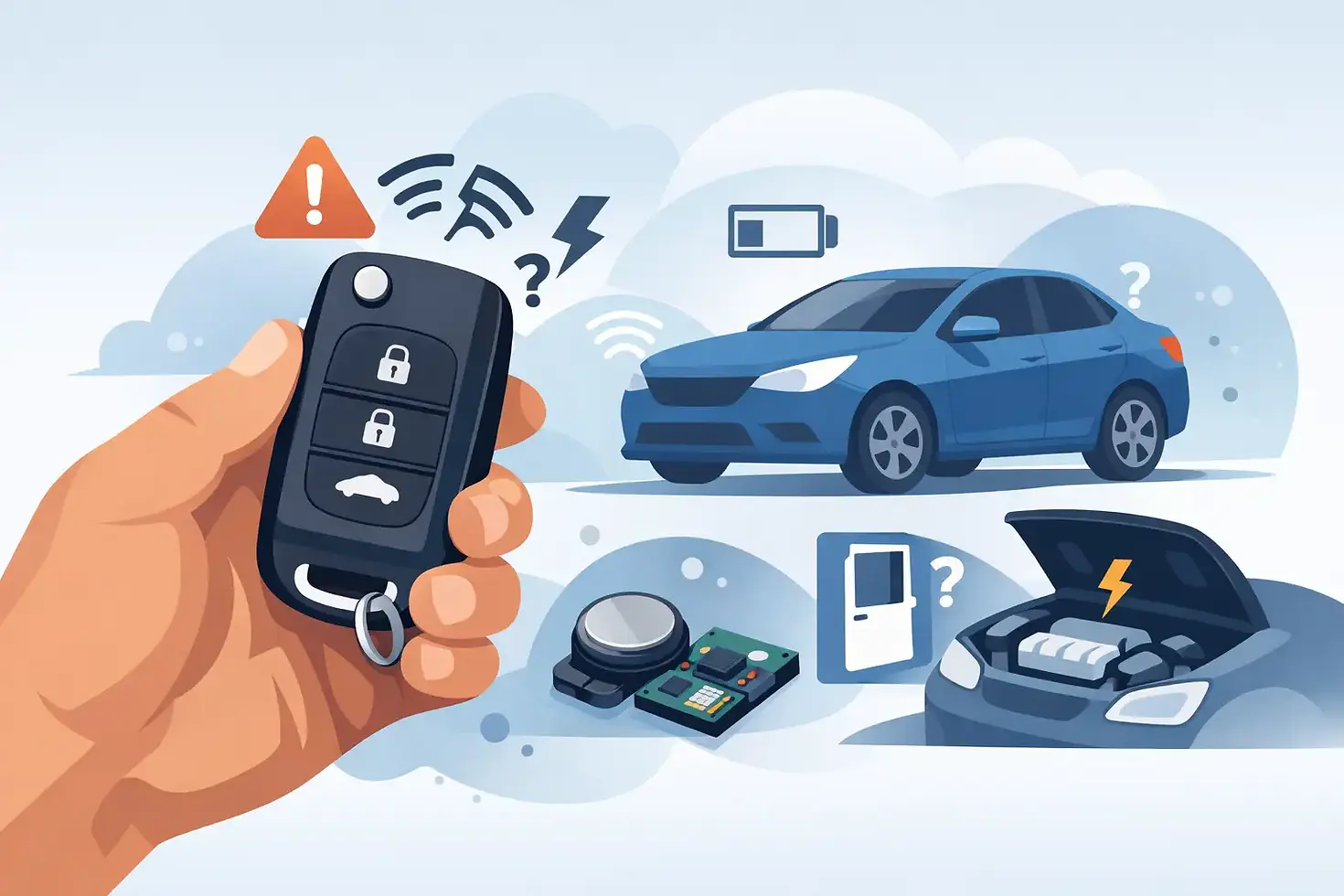
You walk up to your car, press the button, and nothing happens. If you're asking why does key fob stop working, the answer is usually something simple at first - but not always something you can ignore. A dead battery is common, but signal problems, internal damage, worn buttons, programming loss, and vehicle-side faults can all cause the same no-response problem.
The tricky part is that key fob issues can look identical from the outside. One driver needs a battery. Another needs the fob reprogrammed. Someone else has a bad receiver in the car, and replacing the remote won't fix a thing. That's why a quick, practical check matters before you spend money on the wrong solution.
Why does key fob stop working all of a sudden?
A key fob can seem to fail without warning, but most of the time there was a buildup behind it. The battery was getting weak. Moisture had already gotten inside. The case may have been cracked after a drop. The buttons may have been wearing down for weeks before they stopped making proper contact.
Sometimes the change really is sudden. If the fob was dropped in water, crushed, or left in extreme heat, the circuit board can fail immediately. If your car battery was disconnected or replaced, some vehicles may also need the system reset or the remote synced again.
There is also the simple possibility that the problem is not the fob at all. If the vehicle's receiver, door lock actuator, or push-to-start detection system has a fault, the key fob may appear dead even though it is still transmitting.
The most common reason a key fob stops working
The battery is the first thing to suspect because it is the most frequent failure point and the easiest fix. Most key fobs rely on a small coin cell battery. As it weakens, the signal gets inconsistent before it fails completely.
You may notice the range gets shorter first. You have to stand closer to the car, press the button more than once, or hold the fob in a specific position. Then one day it stops responding entirely.
Battery replacement is usually straightforward, but there are trade-offs. If you force the case open the wrong way, you can crack the shell or damage the tabs. If the battery is installed backward, the fob still won't work. If the contacts are bent or corroded, a new battery alone may not solve it.
Other reasons your key fob may stop working
If a new battery doesn't fix the problem, the next step is figuring out whether the fault is in the fob or in the vehicle.
Damaged buttons or worn internal contacts
A fob that has been used for years can wear out physically. The rubber button pad can tear, the switch under the button can fail, or the internal contact points can stop connecting properly. In that case, one button may work while another does not, or you may have to press unusually hard to get any response.
Water damage
Moisture is rough on electronics. A key fob that went through the wash, got caught in the rain, or sat in a damp cup holder can corrode inside. Sometimes it quits right away. Sometimes it works for a day or two and then fails after corrosion spreads.
Broken circuit board or loose battery terminals
Dropping a fob on concrete can crack solder joints or loosen battery clips. The case may look fine while the electronics inside are not. If the battery shifts around in the compartment, the fob may work off and on.
Lost programming
Some key fobs lose synchronization with the vehicle after battery changes, electrical issues, or failed programming attempts. This is more common with certain makes and models. The fix may be as simple as a relearn procedure, or it may require specialized programming equipment.
Interference or signal blockage
Strong electronic interference can affect remote signals. This is less common than battery or damage problems, but it does happen around some buildings, towers, and equipment. If your fob fails only in one location and works elsewhere, interference is worth considering.
Vehicle-side problems
Door lock issues, receiver module failure, blown fuses, or push-button start system faults can all mimic a bad fob. If you have a second fob and neither one works, the vehicle itself becomes the stronger suspect.
What to check before you call for help
Start with the obvious. Try the spare fob if you have one. If the spare works, your main fob is the problem. If neither works, the issue may be in the car.
Next, replace the battery with the correct type. Use a fresh battery, not one that has been sitting loose in a drawer for years. Make sure it is installed in the right direction and that the contacts are clean and making pressure.
Look at the fob closely. Check for a cracked case, sticky buttons, signs of water, or a battery cover that doesn't stay secure. If the mechanical emergency key is built into the fob, use it to confirm whether the lock cylinder still operates.
If your car has push-button start, hold the fob close to the start button or designated backup spot and try again. Many vehicles have an emergency method for starting when the fob battery is weak. It varies by manufacturer, so the result depends on your vehicle.
If the car unlocks manually but still won't start, that often points to a transponder or smart key recognition issue rather than just a lock remote issue.
When a battery change will not solve it
A lot of drivers replace the battery and assume that should cover everything. If it still does not work, they keep pressing buttons harder or trying random internet tricks. That usually wastes time.
If the fob has water damage, broken internal parts, failed chip components, or lost programming, the battery was never the real problem. On newer vehicles, the key fob is not just a remote lock control. It is often tied into anti-theft functions, immobilizer systems, and push-to-start authorization. Once those systems are involved, diagnosis matters more than guesswork.
This is also where cheap replacement fobs can create more confusion. Some aftermarket remotes work fine. Some do not match the vehicle properly, have poor signal strength, or still require programming before they do anything. A low price does not help if the car still will not recognize the key.
Can you still drive if the key fob stops working?
It depends on the type of key system your vehicle uses. If you have a traditional key with a separate remote, you may still be able to unlock the door manually and start the car with the physical key.
If you have a transponder key or smart key system, the answer changes. Many vehicles will not start unless the chip or smart key is recognized, even if you can open the door. Some push-to-start vehicles have a backup start procedure for a dead fob battery, but that will not help if the fob itself is damaged or no longer programmed.
So yes, sometimes you can still drive. Other times you are effectively stranded even though the doors open. That is why the exact symptom matters - no unlock, no start, intermittent response, or total failure.
When to call a locksmith instead of a dealer
If you're stuck at home, at work, in a parking lot, or on the side of the road, a mobile automotive locksmith is usually the faster option. A dealer may still be necessary in rare cases, especially for certain high-security systems, but many fob problems can be handled on-site.
That includes battery replacement, key fob replacement, transponder programming, smart key programming, emergency unlocking, and diagnosing whether the original fob or the vehicle is the issue. For drivers in a bind, speed matters more than theory.
Locked Out Assistance handles these kinds of problems on-site in the Tehachapi area, which is often the difference between getting moving again today or waiting around for a tow and a service appointment.
How to avoid key fob problems going forward
Most key fobs do not fail at the best time, so basic prevention helps. Replace the battery when range starts getting weak instead of waiting for a complete failure. Keep the fob dry, avoid crushing it in pockets or tool bags, and don't ignore cracked cases.
If you only have one working fob, consider getting a spare before it becomes urgent. That is one of those expenses people put off until they are locked out, late, or stranded. At that point, the problem is more expensive and a lot more stressful.
A key fob usually stops working for a reason you can identify, but not always one you can fix with a battery and a quick reset. If the simple checks do not solve it, getting the right diagnosis fast is the better move than guessing your way into a bigger problem.



Comments